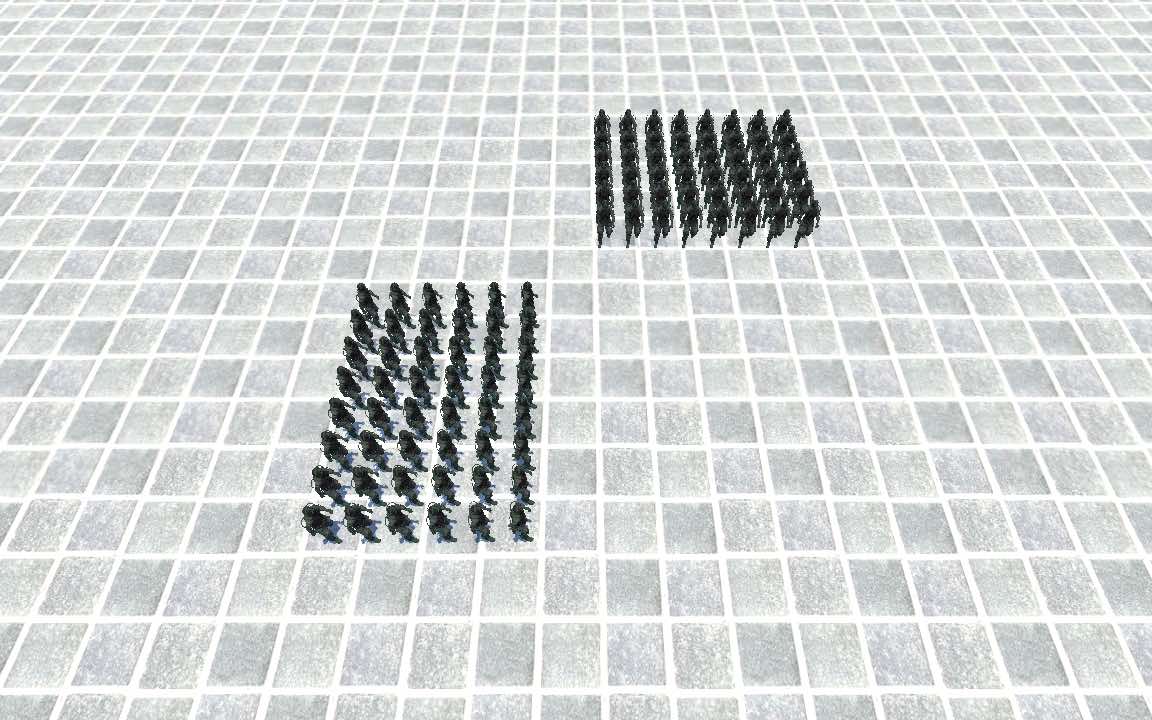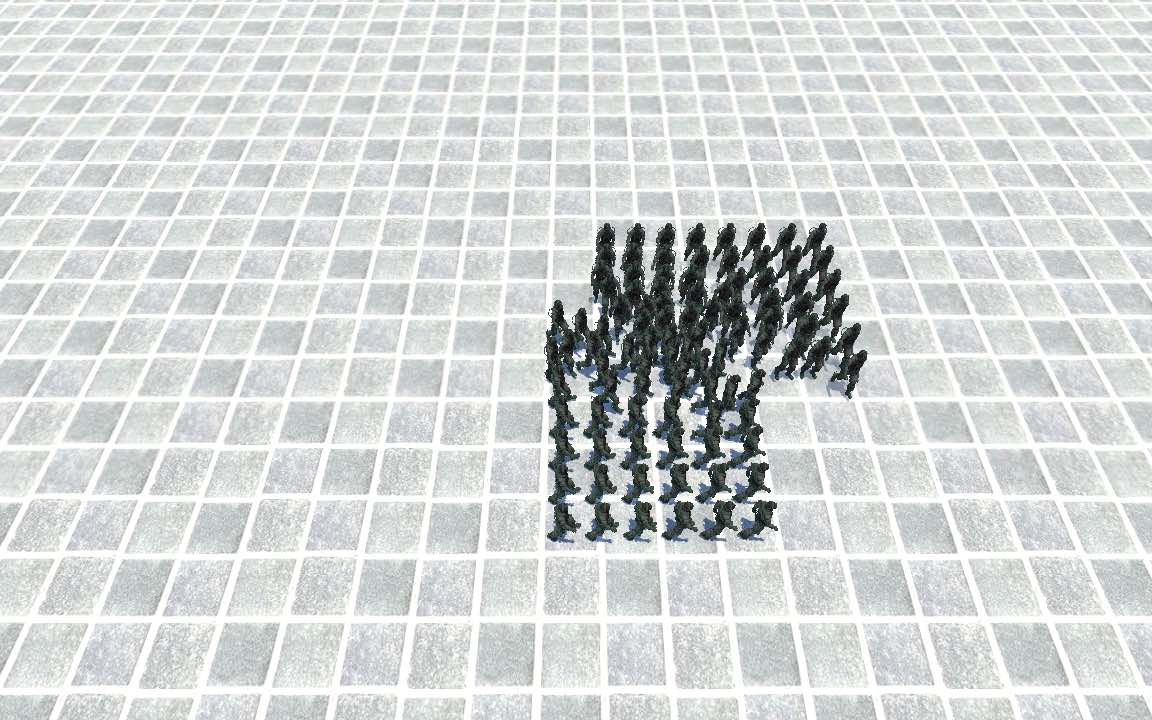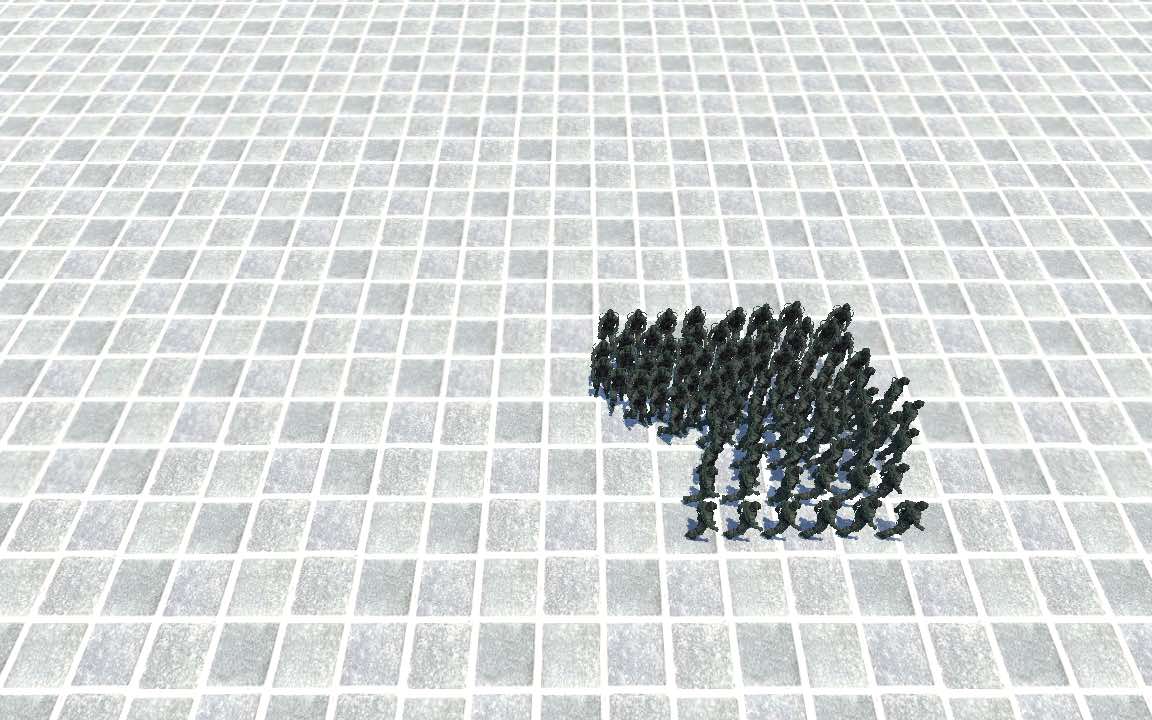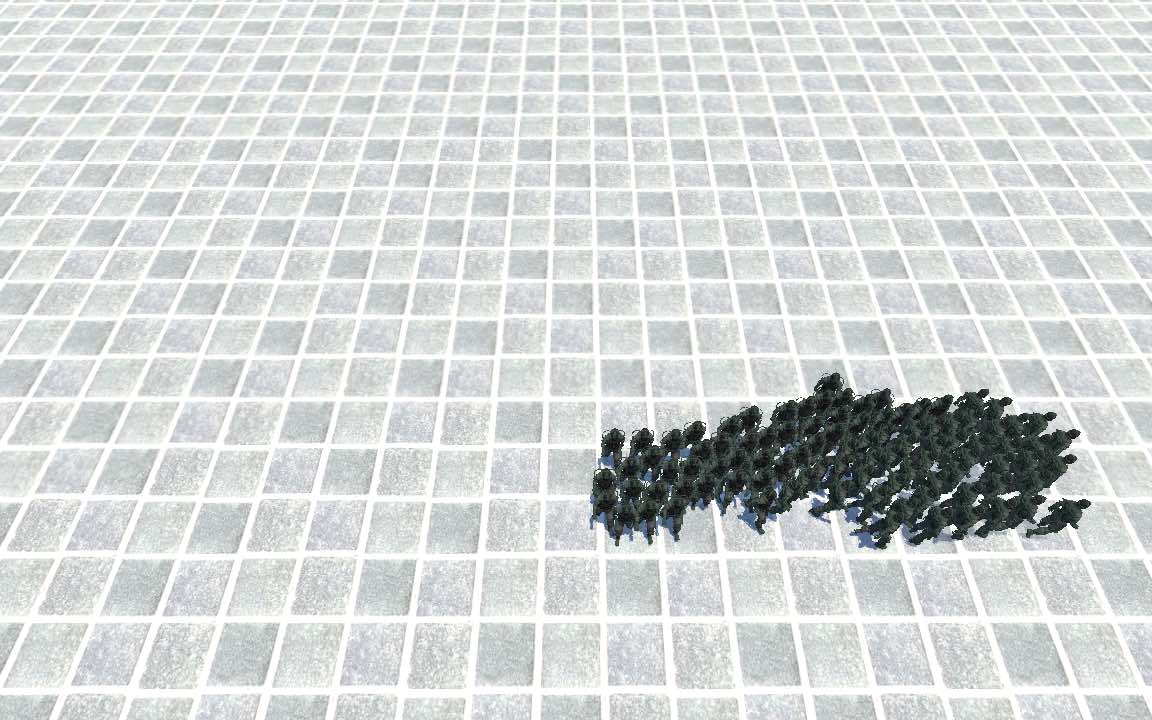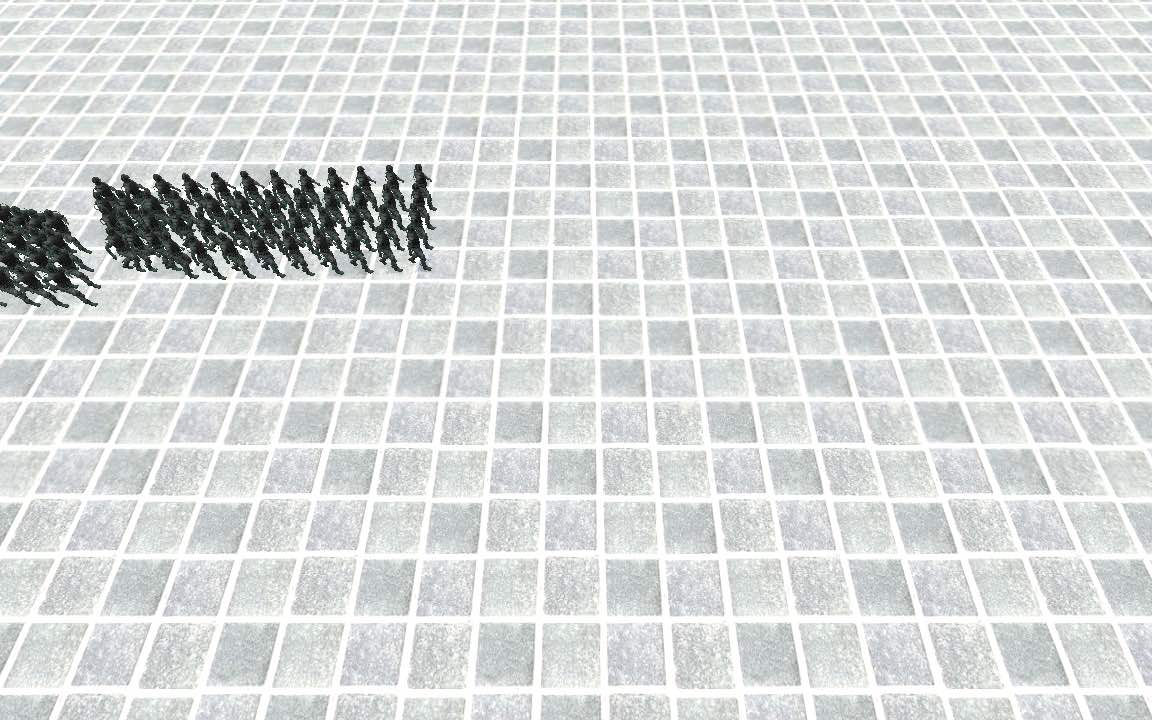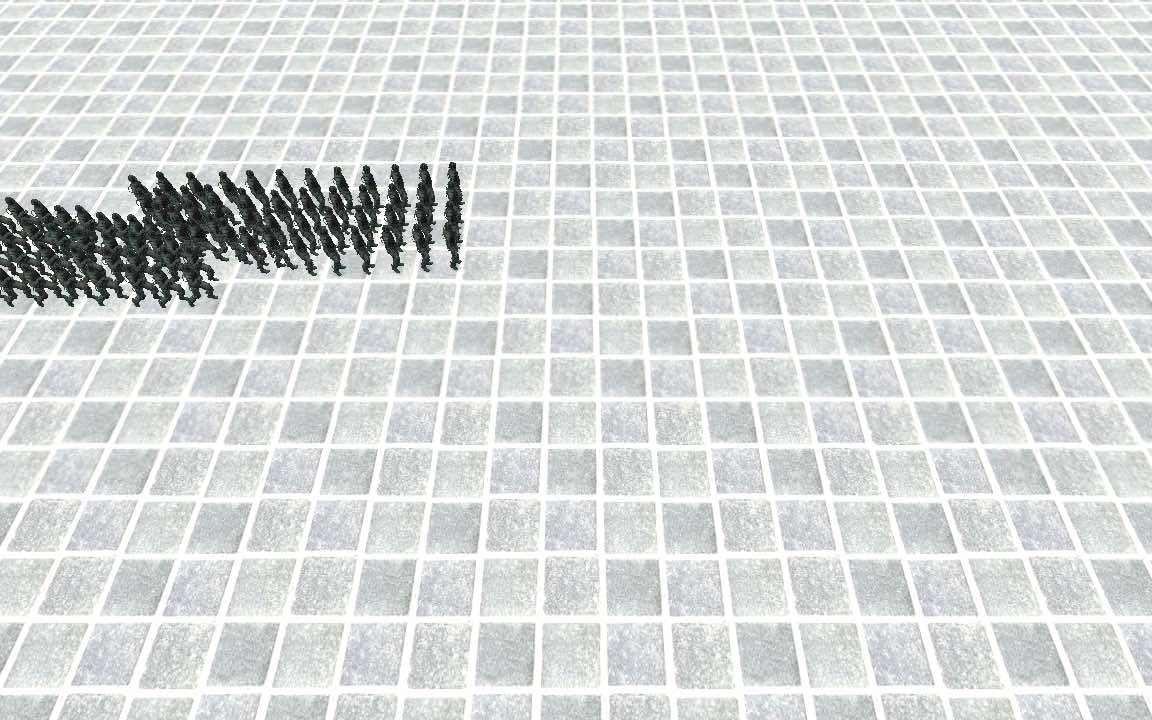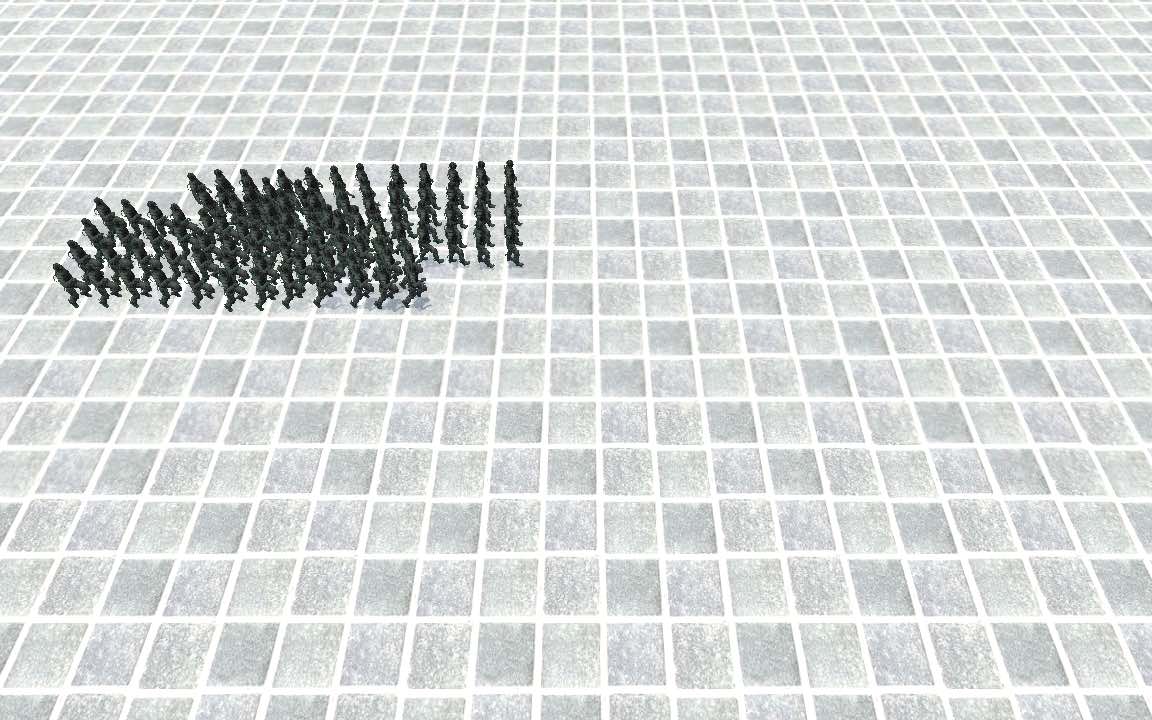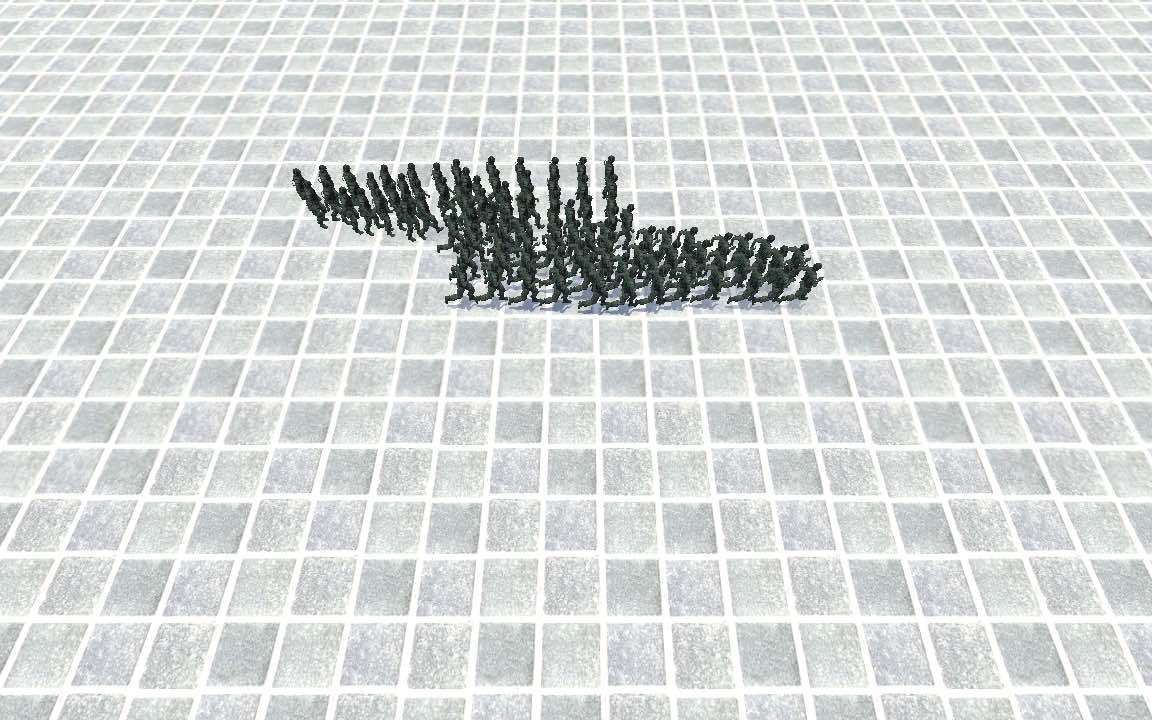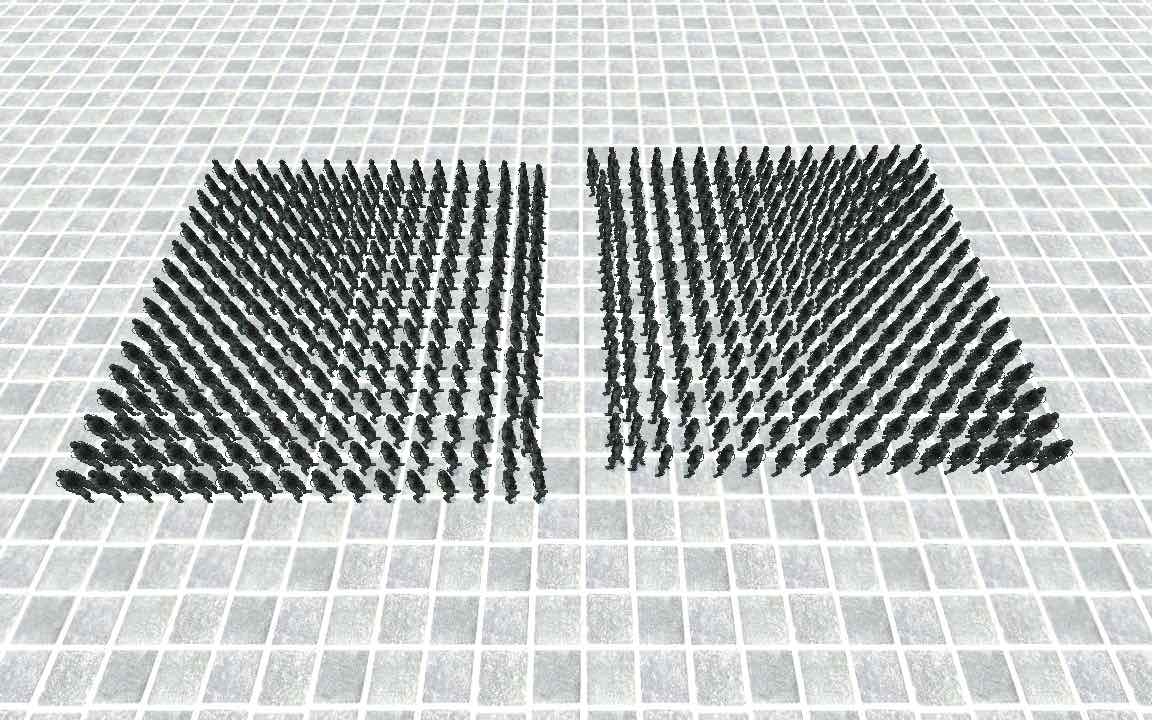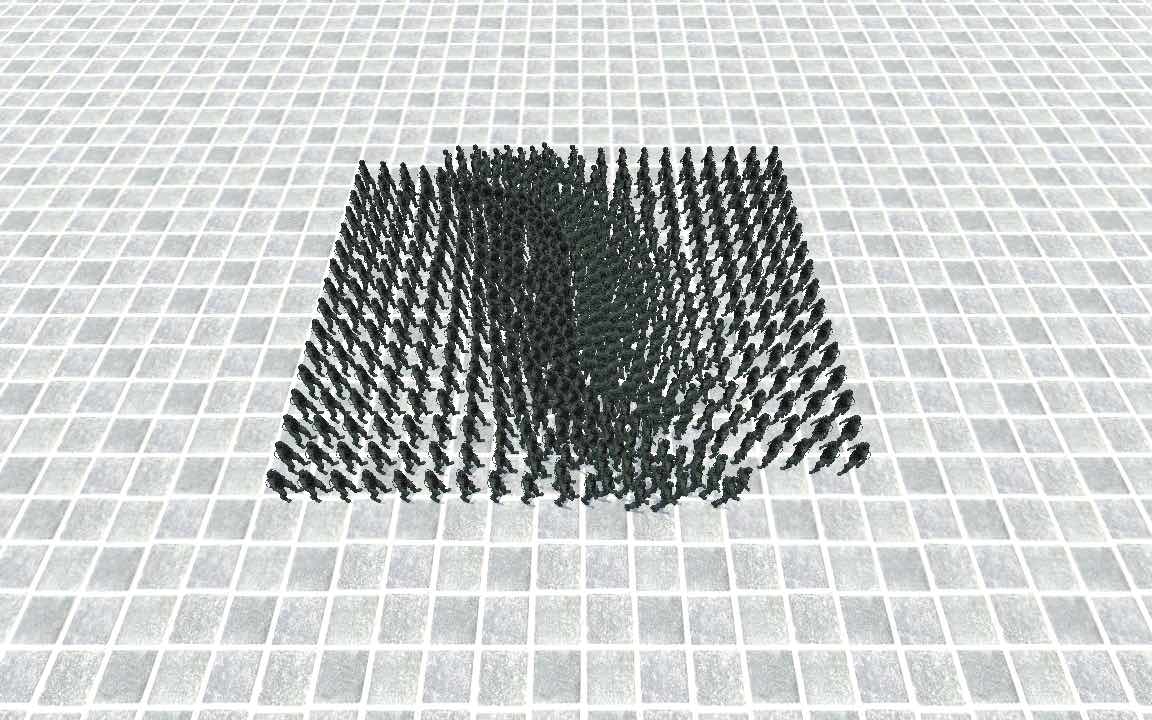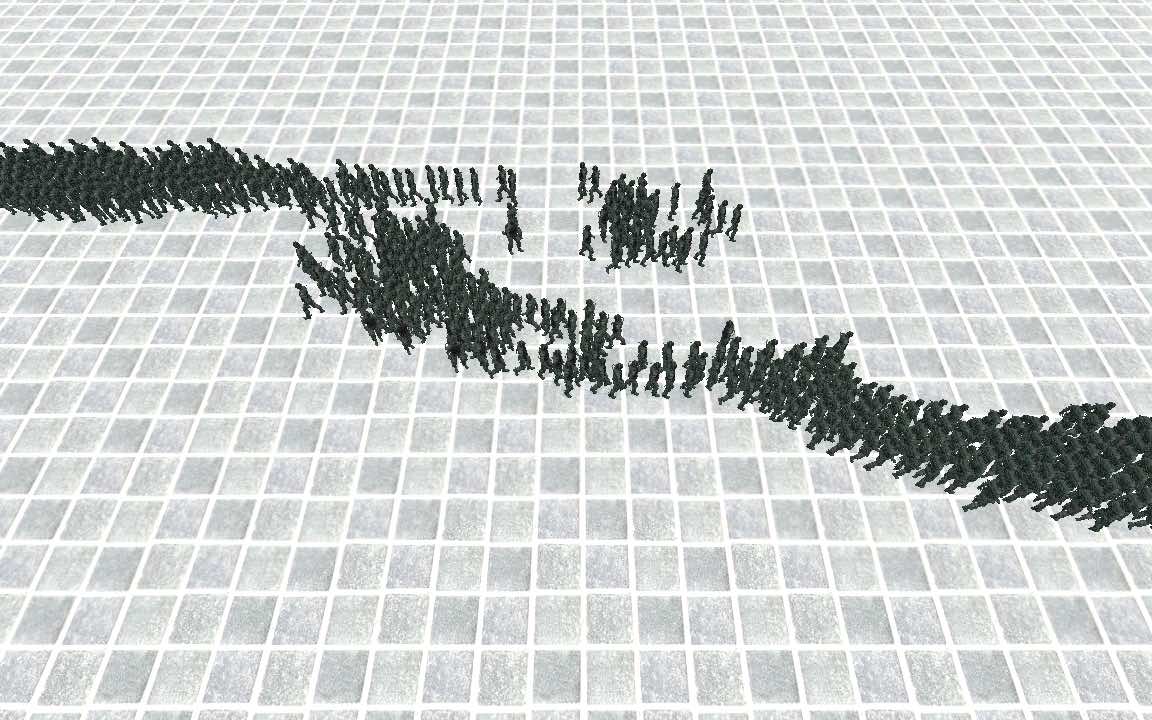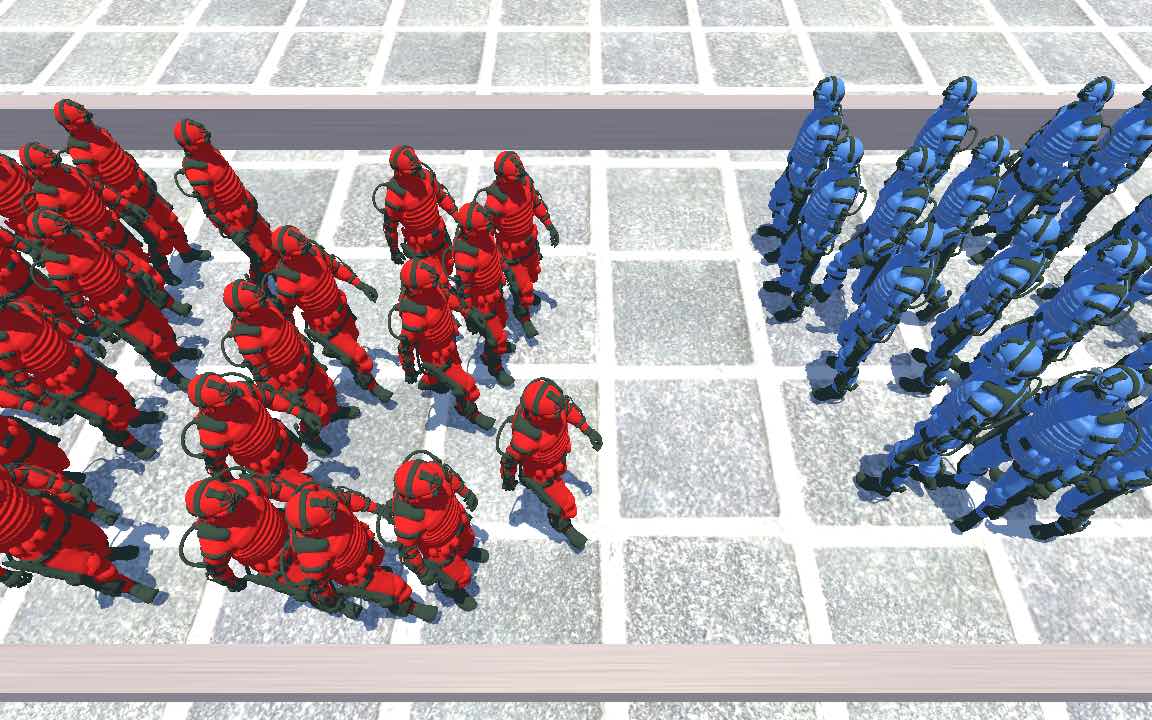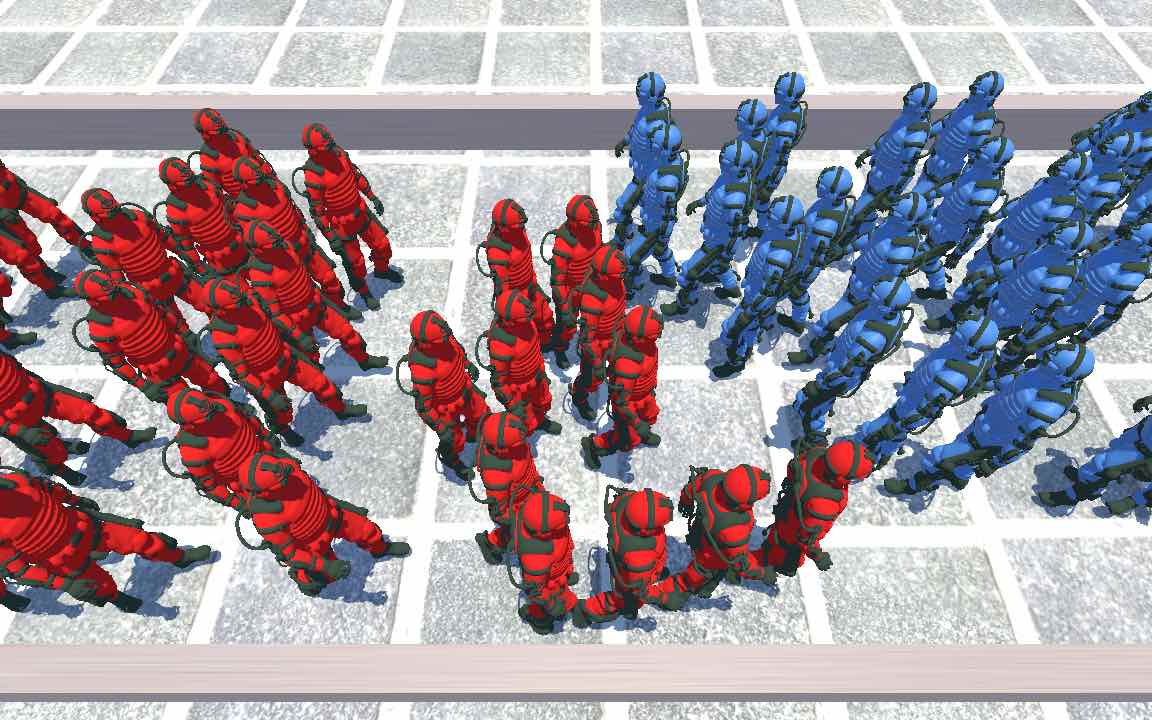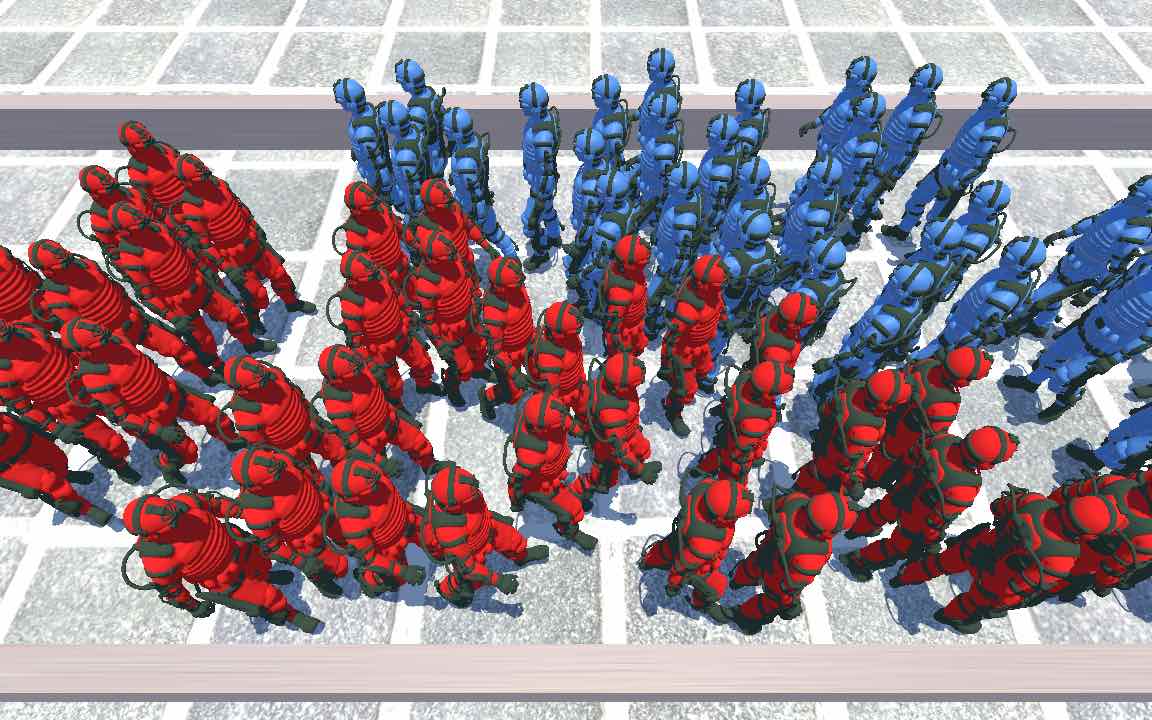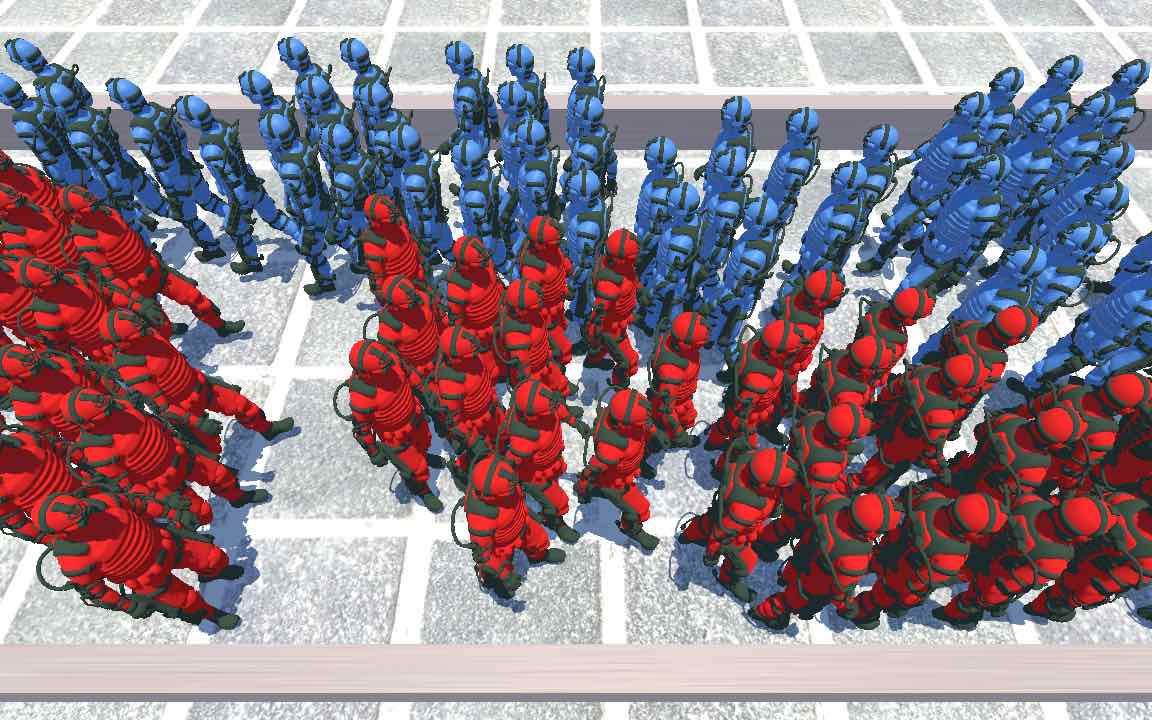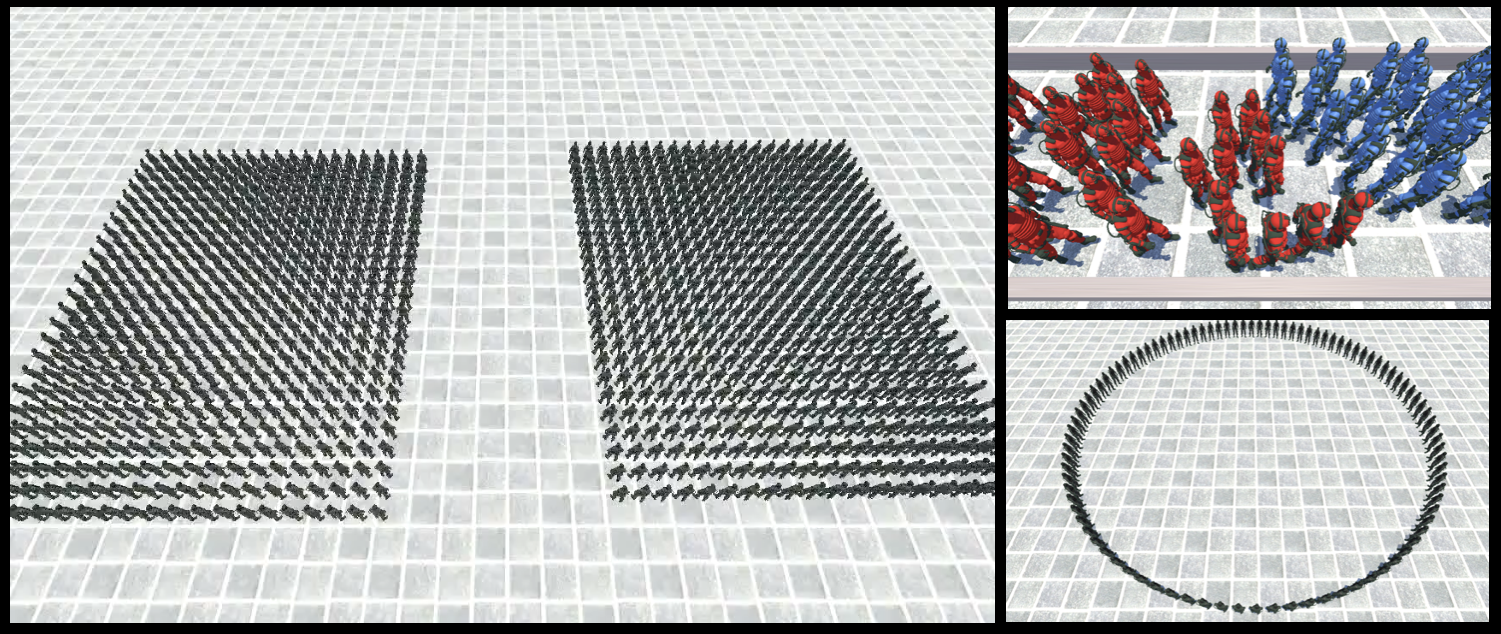
We introduce a crowd simulation method that uses a block coordinate descent solver reminiscent of projective dynamics approaches. Existing projective dynamics work focuses on simulating deformable materials, which makes us the first to incorporate crowds into such a framework. We simulate agents as nodes in a mass-spring system, where springs are created dynamically to represent different crowd phenomena. We propose novel projective solutions for these springs to emulate time-to-collision avoidance behaviors. Our method captures the collective response of the crowd using implicit Euler integration, while a conjugate gradient solver efficiently resolves the resulting mass-spring linear system, enabling the simulation of large-scale, emergent crowd behaviors.
@inproceedings{weiss:mig:2025,
author = {Weiss, Tomer},
title = {Projective Multi-Agent Dynamics},
year = {2025},
publisher = {Association for Computing Machinery},
address = {New York, NY, USA},
doi = {10.1145/3769047.3769065},
booktitle = {Proceedings of the 2025 18th ACM SIGGRAPH Conference on Motion, Interaction, and Games},
articleno = {19},
numpages = {8},
series = {MIG '25}
}